Accenture — Fjord
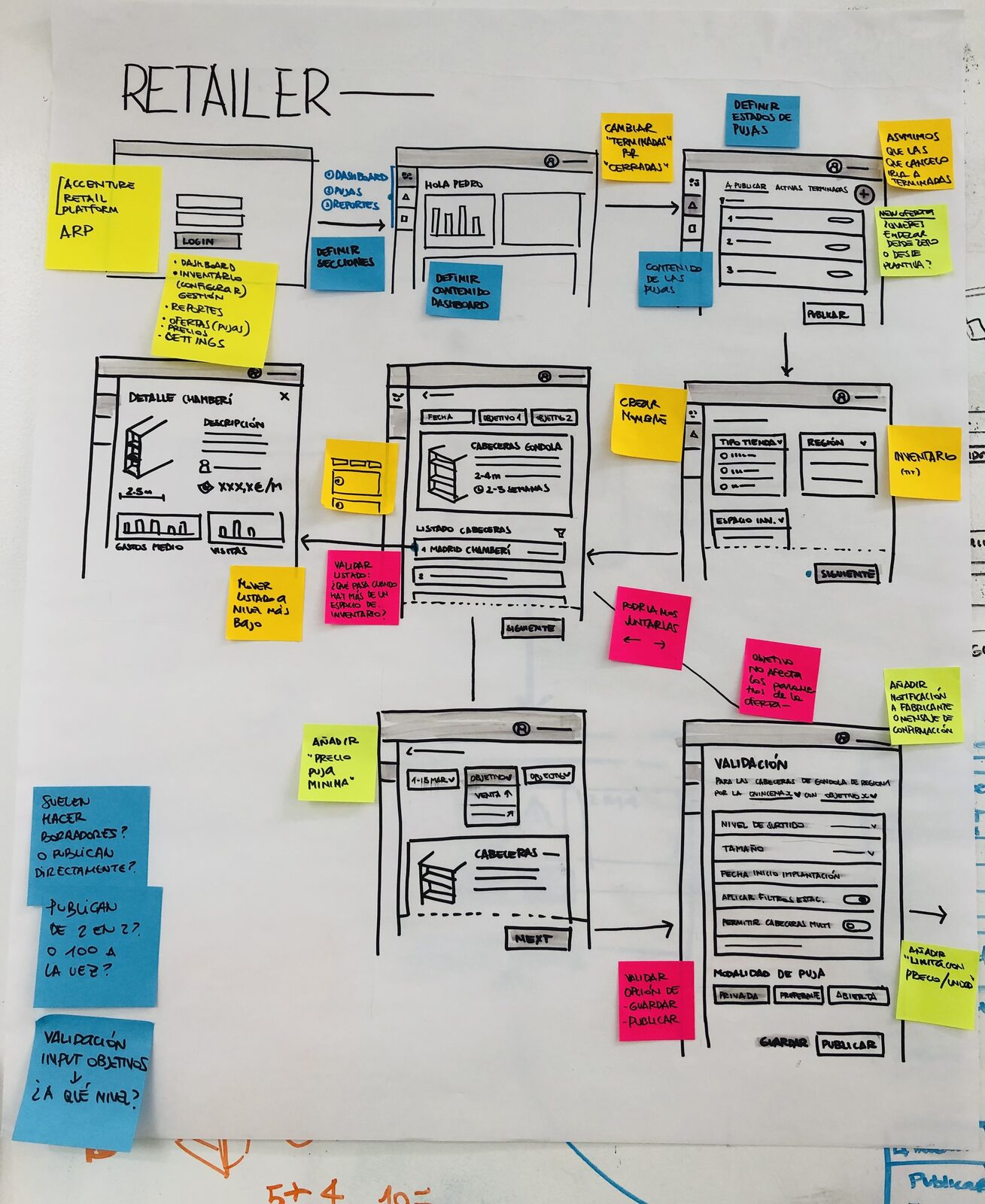
Five years designing interfaces and creating new working methods with no playbook yet, work that later became projects the agency sold.
Where
Madrid, working daily in English with an international team; close to a year based in Athens, Greece, for one project
Role
UX, User Research, Service Design and XR concept design
Product context
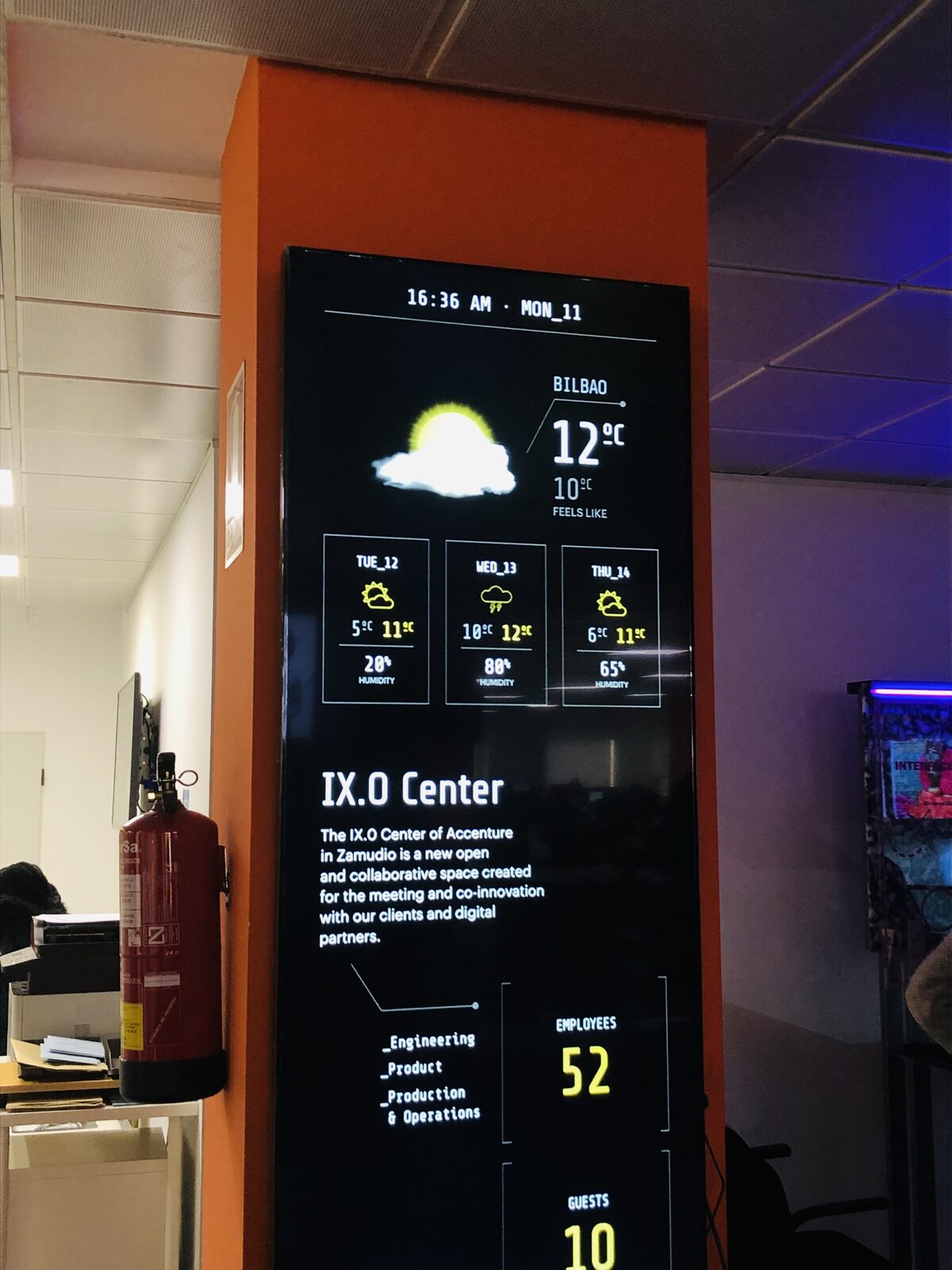
Before dedicating myself full-time to XR, I spent ten years designing interfaces for mobile and web. The last five of those years, from 2015 to 2020, were at Fjord, the design agency Accenture acquired.
Main challenges
The value of this stage was not in any single deliverable, but in being early: exploring new devices and new ways of working before clients were asking for them, so that when they did, there was already a working answer to sell.
Five years, many industries
I worked on service design, user research and mobile products across very different sectors: banking and insurance, telecom clients like Telefónica and Movistar, energy with Repsol, and higher education with UNIR.
I also spent close to a year based in Athens for one project, working day to day in English with an international team.
Safety Scan
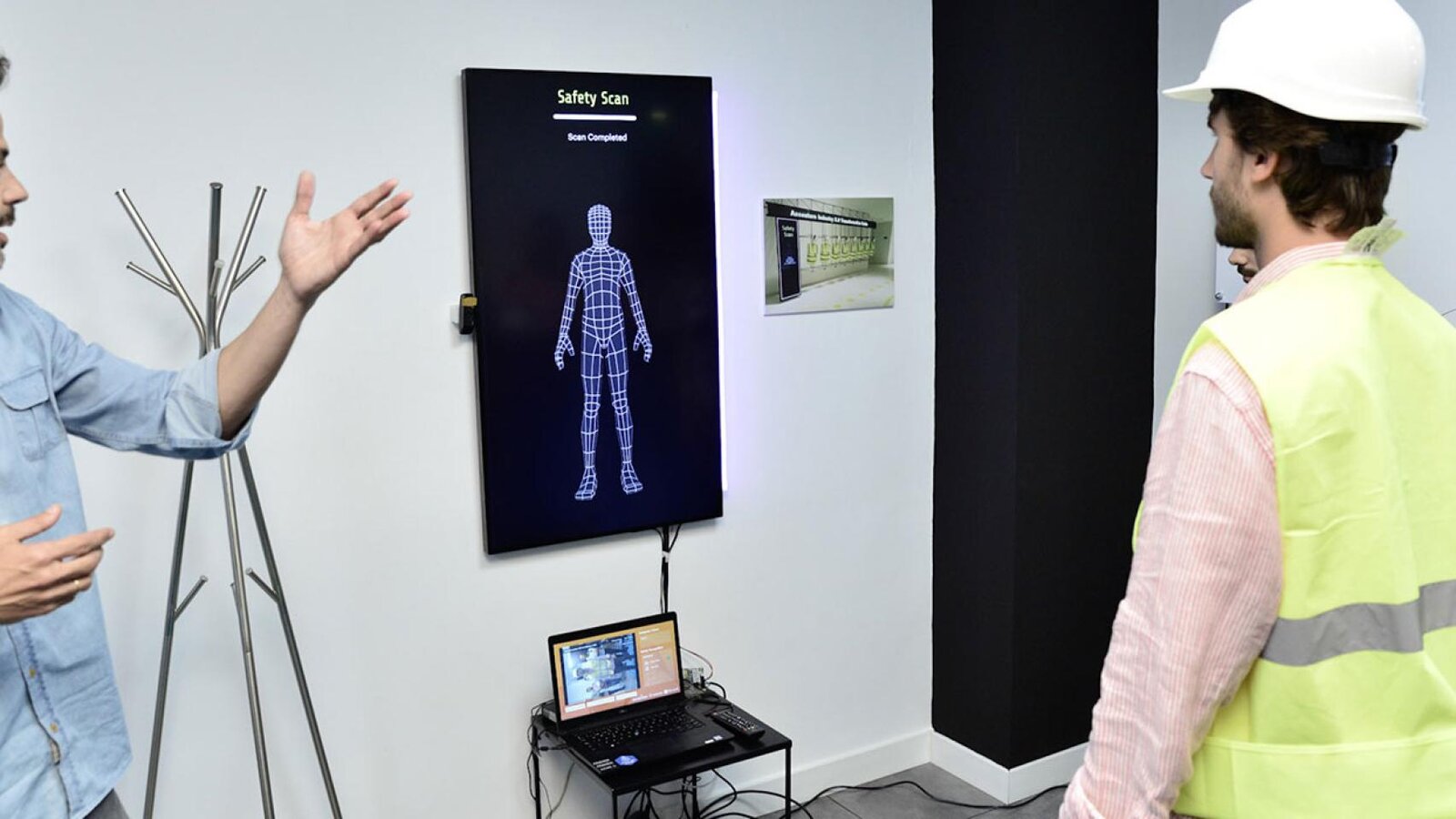
I designed the concept for a real-time safety scan experience: a wall display showing scan status and a wireframe avatar as a person's safety equipment was checked, used in an industrial setting.
It is a small example of what spatial interfaces are good for: information that used to live on a clipboard, now visible the moment it matters.
UAV Cockpit
For a project in the aviation sector, I worked on a mixed reality concept using HoloLens 1: an aircraft and its live metrics shown next to a terrain mockup, with the UAV's flight trajectories visualized in place.
It is the kind of interface that only makes sense once data can be anchored to physical space.
IKEA
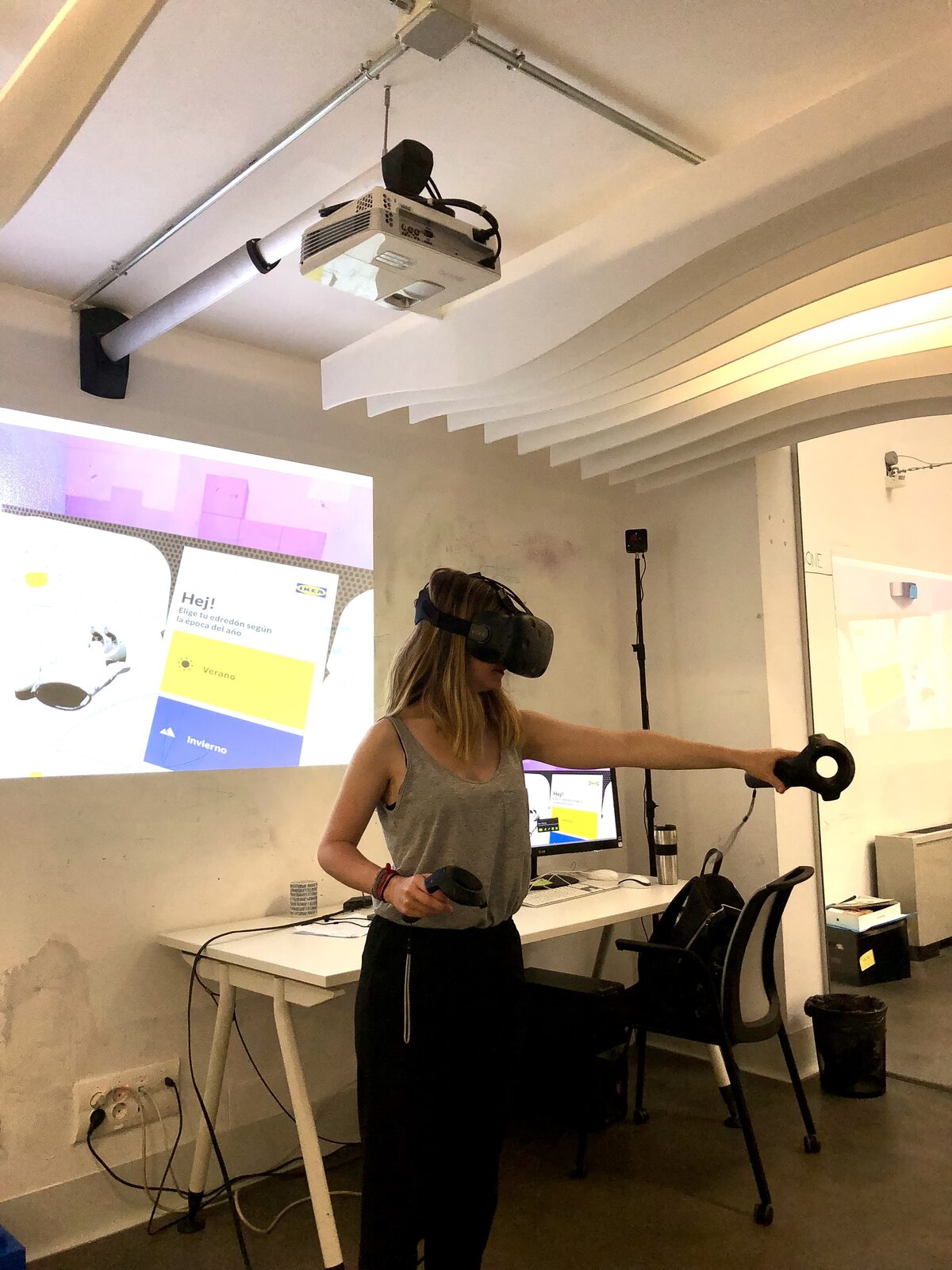
For IKEA, I worked on a VR concept to help shoppers choose furniture, like duvets, based on real needs such as the season, rather than guessing in a showroom.
We tested it directly with users in VR, comparing what they chose in the headset against what they would choose on a screen.
Bringing XR into the agency
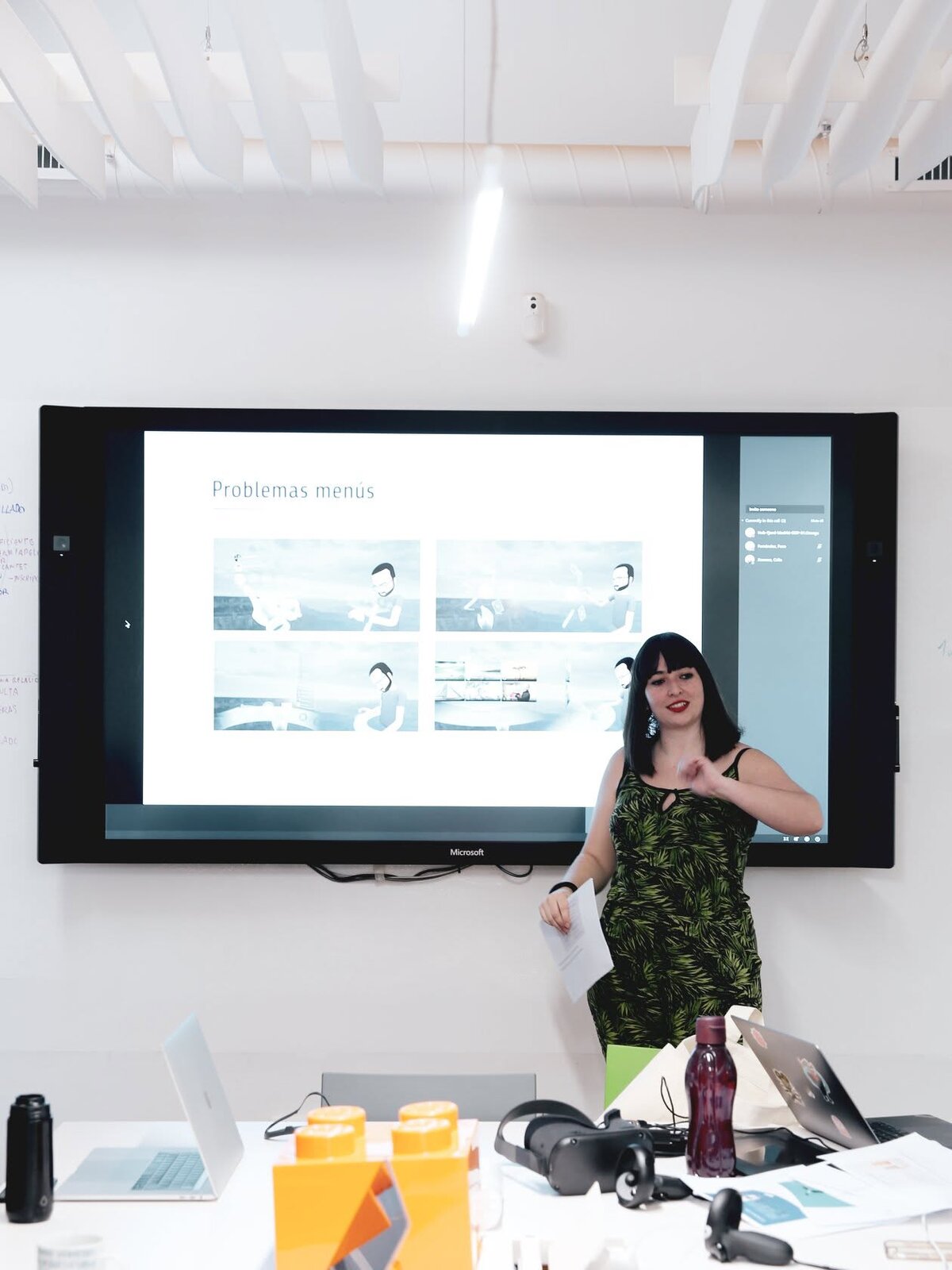
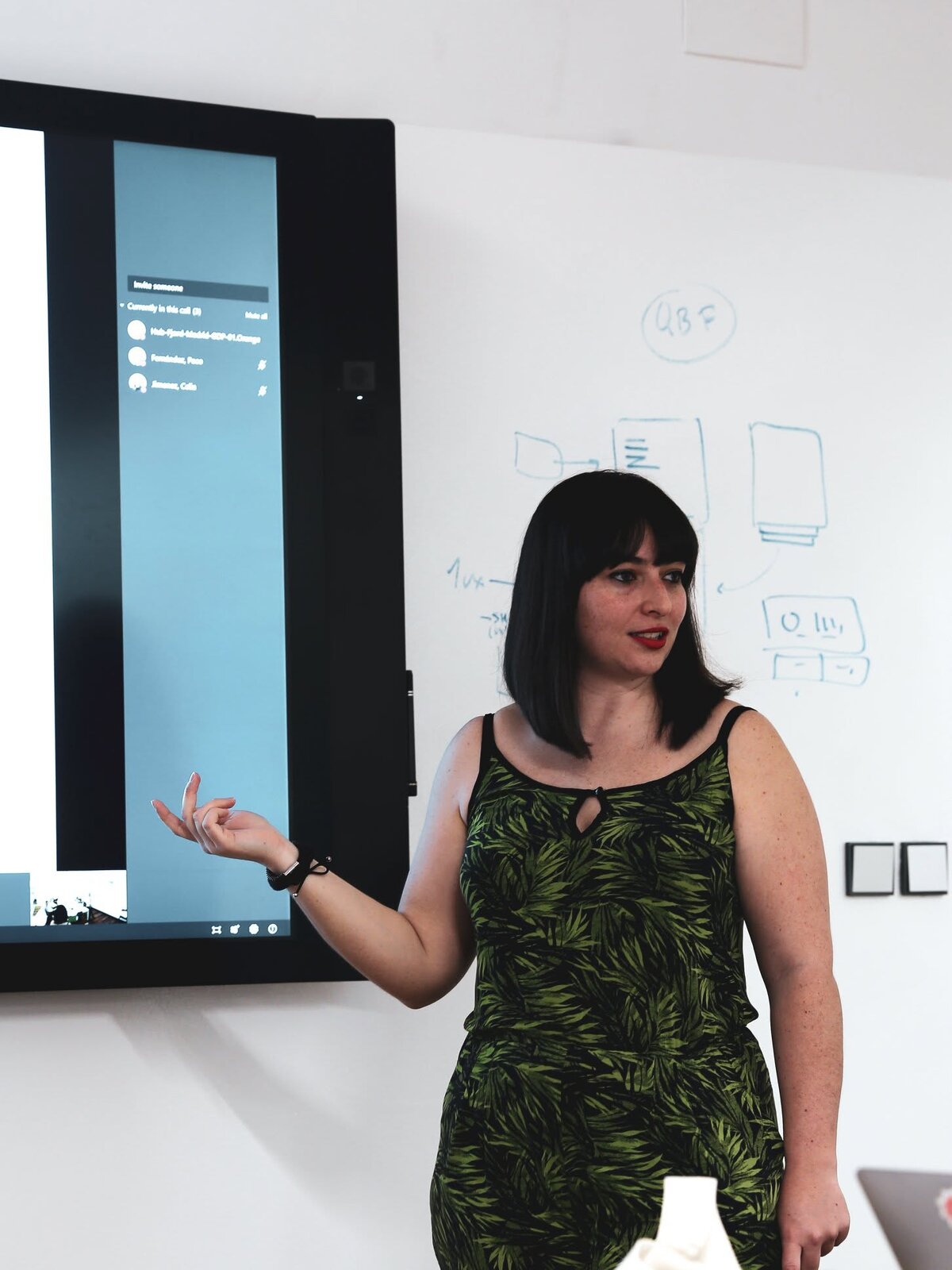
Part of this stage was internal: presenting XR work back to the agency itself, from interaction problems in VR menus to early sketches on a whiteboard, to build the case for headsets and spatial design as something worth investing in.
That internal groundwork is what let later XR projects get greenlit faster.